“I Feel Like I Got a Second Chance”: An Engineer’s Journey with Bronchial Valves

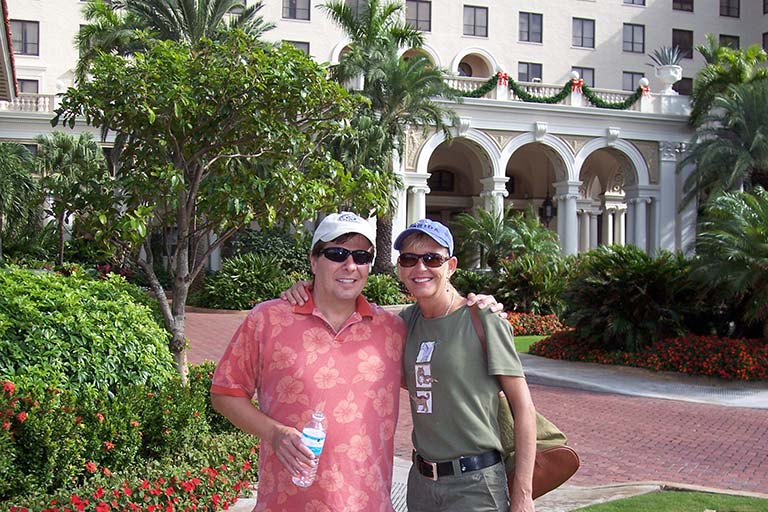
"The treatment made me feel like I was given a second chance," says Russ Welchert, a career engineer in the U.S. In his late 50s, Russ was diagnosed with emphysema and underwent a procedure to place small valves in his bronchi to improve his breathing. "I’m truly happy now," he adds with a smile. We asked Russ how he confronted his disease and found the way forward.

A Shocking Diagnosis

Born in Illinois, Russ spent decades working in electronics manufacturing. As a manufacturing engineer and software developer, his job was to analyze problems, devise solutions, and improve systems until they ran smoothly.

Engineering-driven improvement was both his identity and his source of pride. But in his 40s, he faced a problem that technology couldn't solve. He began to feel something was wrong with his lungs, and breathing became difficult.

During softball games with friends, just running to first base left him out of breath and sitting on the ground. Problems arose even while playing darts. "If I dropped a dart and had to bend over to pick it up, just that motion would make me struggle for air," Russ explains.

He was then told by his doctor that he had Alpha-1 Antitrypsin Deficiency (AATD), a rare genetic condition in which the liver does not produce enough of the protein that protects the air sacs in the lungs, leading to severe emphysema.

Lung function tests showed that the amount of air he could exhale in the first second (FEV1) had fallen to about 28% of the expected level, highlighting the severity of his condition. Russ was devastated when he learned at a medical conference that ‘at this level, the median survival is about five years.’

An Engineer’s Approach to Illness

But Russ didn’t let the disease stop him. Using the mindset he had cultivated as an engineer, he calmly analyzed his condition, broke down his challenges, and tackled them one by one.

A smoker at the time, Russ decided to quit immediately. He also found a foundation supporting AATD research and treatment, and thoroughly researched how the disease worked.

A year later, his FEV1 improved to the low 40s. It was a phenomenon known as the "Smoker's Bounce," where numbers temporarily recover after quitting smoking.

Although his numbers gradually declined afterwards due to the chronic progression of the disease, Russ maintained a disciplined lifestyle for nearly 20 years. Through strict self-management—diet, medication, and long-distance walking—he managed to slow the decline.

Eventually, however, his body reached its biological limit. By 2023, his lung function had dropped to about 33%. Due to emphysema, his lungs had become like "stretched-out bags" that lost their elasticity; stale air got trapped inside, leaving no room for fresh air to enter.

Discovering the Bronchial Valve Treatment

Russ, who never stopped gathering information, kept up with advancements in medical technology. He learned about an innovative treatment being performed by a university doctor. To Russ the engineer, the mechanism made perfect sense.

The procedure involves placing small, one-way valves into the airways of the damaged lung. These valves allow trapped air to escape but prevent new air from entering. This allows the healthy parts of the lung to expand more easily, making breathing easier.

Russ emailed the doctor, asking, "Could you look at my test results and tell me if I’m a candidate for this treatment?"

The doctor conducted various tests, including blood work, CT scans, and lung function tests, and determined that Russ was a suitable candidate for the bronchial valve treatment. He noted that Russ’s history of keeping active and walking for years would likely work in his favor.

In October 2024, Russ underwent the procedure. Seven bronchial valves were placed in the most damaged part of his right lung. As there is a potential risk of pneumothorax (collapsed lung) with this treatment, he remained in the hospital for three days for observation.

He realized the valves inside his lungs were working as intended when he returned home to Illinois. He went for a walk around his usual track at the park and felt that breathing had become easier.

"Within a week or two, I was walking much farther than before, and with much less effort," Russ recalls. Even bending over to tie his shoes or pick up objects was no longer a struggle.

A Future Opened by Technology

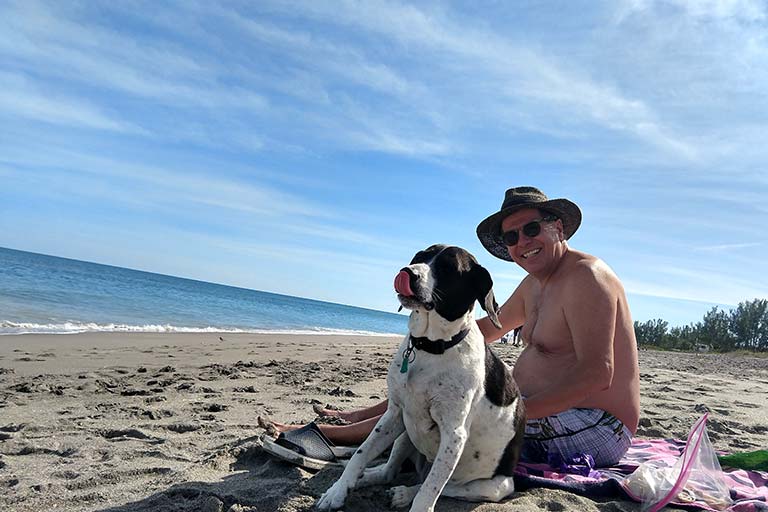
Since then, Russ has moved to Florida. He built a new home and is living life to the fullest, starting a second chapter with his family.

As a technology enthusiast who avidly follows the evolution of robots and AI, Russ draws a parallel between the medical device in his lungs and future innovations.

"I want a robot soon to help me with DIY projects around the house," he says. "It would be a great partner to hold the other end of a board for me."

Looking back on the journey from a grim diagnosis to a new life, Russ offers advice to others in similar situations:

"If you can move, you are better off moving than doing nothing," he emphasizes. "There will be a big payoff in the future. If you keep moving, there is a chance you will see light at the end of the tunnel."

Russ Welchert refused to look away from the changes in his body, facing them with an engineer's mind. Thanks to his inherent resilience and a tiny device born from the latest technology, he continues to live happily today.

*This story is based on an interview conducted in December 2025. The conditions, feelings, and treatment of each patient may vary from person to person. Please consult your doctor for your diagnosis and treatment.